 chi.zhang
Eine modernere, datenbasierte Methode. Man nutzt Tools wie Google Keyword Planner, um herauszufinden, wonach Menschen suchen. Hohes Suchvolumen bei geringer Konkurrenz kann ein Signal sein: Hier gibt es Nachfrage, aber noch kein befriedigendes Angebot.
Mein Fazit: Als SEO Expertin kann ich absolut nachvollziehen, dass Keywords sehr faszinierend und verführerisch sind. Aber das System ist viel komplexer als eine einfache Zahl. Eine Keyword-Analyse ist die digitale Variante von “Marktlücke Analyse”, mit echten Daten. Aber das Prinzip ist gleich: Hier sucht man eigentlich nur nach Geld und das ist keine solide Basis, gerade für Leute, die nachhaltig und langfristig ein Unternehmen gründen und betreiben wollen, anstatt schnell ein Unternehmen aufzubauen und dann an möglichen Giganten zu verkaufen.
Warum die Kunst der Stichwortsuche für Unternehmen neu erfunden werden muss
Es ist ein Dienstagmorgen in einer Berliner Küche. Jemand bereitet Frühstück vor, die Hände sind voller Teig, und fragt in den Raum: „Wo finde ich jetzt noch einen Bioladen für Hundefutter?” Der Smart Speaker antwortet. Keine Tipperei, kein Bildschirm. Nur eine Stimme, die eine einzige Quelle zitiert. Für alle anderen Anbieter: Funkstille.
Diese Szene ist keine Zukunftsvision mehr. Sie ist Gegenwart. Und sie verändert grundlegend, wie Unternehmen überhaupt gefunden werden können. Mehr als die Hälfte aller Suchanfragen auf Mobilgeräten erfolgt bereits per Sprache. In den USA nutzen über 153 Millionen Erwachsene regelmäßig Sprachassistenten. Weltweit ist es etwa jeder fünfte Internetnutzer. Die Prognosen für den E-Commerce sind eindeutig: Bis 2030 soll fast ein Drittel aller Umsätze über Sprachkanäle laufen.
Das Problem: Die meisten Unternehmen denken immer noch in Stichworten. Sie optimieren ihre Websites für Begriffe wie „Hundefutter Berlin” oder „Salesforce API”. Doch niemand spricht so. Wer mit einem Sprachassistenten redet, formuliert ganze Sätze, stellt Fragen, sucht nach konkreten Lösungen. Die alte Logik des Suchmaschinenmarketings – möglichst viele passende Begriffe unterbringen – läuft ins Leere.
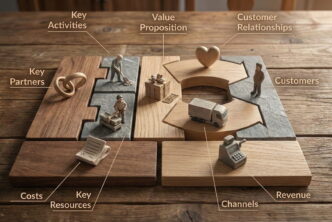
B2B Keyword Strategie ist ein beliebtes Werkzeug, um Geschäftsideen zu entdecken. Wenn dich das Thema interessiert, kannst du gern den Hauptbeitrag „Geschäftsidee finden: Die 5 Phasen der Evolution, die du nicht überspringen kannst.” lesen, um ein Gesamtbild zu bekommen.
Der Unterschied zwischen Tippen und Sprechen
Wenn wir tippen, sind wir ökonomisch. Wir reduzieren Sprache auf das Nötigste: „Pizzaladen Berlin”, „günstiges Hotel Hamburg”. Das spart Zeit und Mühe. Sprachwissenschaftler sprechen von „Pidgin-Sprache” – eine Art grammatikalischer Notbetrieb.
Wenn wir sprechen, verhalten wir uns anders. Wir sagen: „Wo ist der nächste Pizzaladen, der jetzt noch offen hat?” Oder: „Welches Hotel in Hamburg liegt zentral und kostet unter 100 Euro?” Das sind vollständige Sätze mit Kontext, Intention und Nuancen. Für Suchmaschinen sind das zwei völlig verschiedene Welten.
Die Technologie dahinter heißt Natural Language Processing, kurz NLP. Vereinfacht gesagt: Künstliche Intelligenz versteht nicht mehr nur einzelne Wörter, sondern den Zusammenhang. Sie erkennt, ob „Bank” eine Sitzgelegenheit oder ein Geldinstitut meint. Sie versteht, dass „Wie backe ich einen Schokoladenkuchen ohne Mehl?” eine Anleitung erfordert, keine Produktliste.
Diese Entwicklung hat sich zwischen 2024 und 2026 massiv beschleunigt. Der Durchbruch großer Sprachmodelle – der sogenannten Large Language Models – hat die Qualität der Spracherkennung radikal verbessert. Was früher eine frustrierende Aneinanderreihung von irrelevanten Weblinks war, ist heute ein direkter Dialog.
Der Kampf um Position Null
In der alten Welt der Suchmaschinen gab es zehn Ergebnisse pro Seite. Man konnte vergleichen, das dritte oder fünfte Ergebnis anklicken, sich durcharbeiten. In der Welt der Sprachsuche gibt es genau eine Antwort. Der Assistent liest vor, was an Position Null steht – dem sogenannten Featured Snippet. Wer dort nicht ist, existiert nicht.
Das ist kein dramatisierter Vergleich. Es ist eine technische Realität. Alexa liest keine Liste vor. Siri gibt keine Auswahl. Sie präsentieren die beste Antwort. Punkt. Für Unternehmen bedeutet das: Entweder man gewinnt diese Position, oder man verliert den gesamten Traffic aus diesem Kanal.
Besonders drastisch wird das bei lokalen Suchanfragen. Etwa 75 Prozent aller Sprachsuchen haben eine „Near Me”-Intention. Menschen suchen nach dem nächsten Café, der nächsten Apotheke, dem nächsten Baumarkt. Sie wollen wissen: Ist jetzt offen? Wie weit ist es? Was kostet es?
Wenn in diesem Moment die Daten nicht stimmen – wenn die Öffnungszeiten auf der Website anders sind als bei Google Maps, wenn die Telefonnummer auf Yelp nicht mit der auf der Homepage übereinstimmt – dann verliert die KI das Vertrauen. Und wenn sie das Vertrauen verliert, wird diese Quelle nicht vorgelesen. Sie verschwindet aus dem Rennen.
Warum Geschwindigkeit über Sichtbarkeit entscheidet
Ein weiterer, oft unterschätzter Faktor: die Ladezeit. Wer eine Sprachsuche nutzt, erwartet eine sofortige Antwort. Es gibt keine Geduld für langsame Websites. Wenn der Server zu lange braucht, um überhaupt eine Antwort zu senden – Fachleute sprechen von „Time to First Byte” –, springt der Assistent zum nächsten Ergebnis.
Drei Sekunden Ladezeit mögen auf einem Desktop-Computer akzeptabel sein. Für Sprachassistenten sind sie eine Ewigkeit. Die Systeme erwarten Antworten im Millisekundenbereich. Wer hier nicht mithalten kann, wird übersprungen. Die technische Infrastruktur ist kein Nebenschauplatz mehr. Sie ist der Türsteher.
Hinzu kommt eine weitere Ebene: strukturierte Daten, auch Schema Markup genannt. Das klingt technisch, ist aber eigentlich simpel. Stell dir vor, deine Website ist ein Buch in einer Bibliothek. Ohne Schema muss die Suchmaschine jede einzelne Seite lesen, um herauszufinden, worum es geht. Mit Schema steht auf dem Buchrücken ein Etikett: „Rezept. Zubereitungszeit: 30 Minuten. Zutaten: Mehl, Eier, Milch.”
Diese Etiketten – technisch gesehen JSON-LD-Code – helfen der KI, Inhalte sofort zu verstehen. Es gibt spezifische Markierungen für alles: für häufig gestellte Fragen, für Unternehmensstandorte, für Veranstaltungen. Und es gibt sogar „Speakable Schema” – eine Markierung, die der Suchmaschine explizit sagt: „Dieser Absatz ist ideal zum Vorlesen.”
Von Stichworten zu Fragen
Die Konsequenz aus all dem: Unternehmen müssen aufhören, in Stichworten zu denken. Sie müssen anfangen, in Fragen zu denken. Nicht „Salesforce API”, sondern „Wie integriere ich die Salesforce-API in mein Dashboard?” Nicht „Kuchen Rezept”, sondern „Wie backe ich einen Schokoladenkuchen ohne Mehl?”
Das bedeutet auch: Die Art, wie Inhalte geschrieben werden, muss sich ändern. In der klassischen Suchmaschinenoptimierung galt die Faustregel, Schlüsselbegriffe möglichst oft und prominent zu platzieren. Heute geht es darum, die Frage des Nutzers präzise und sofort zu beantworten.
Journalisten nennen das die „umgekehrte Pyramide”: Das Wichtigste zuerst. Für Sprachsuche bedeutet das: Die Antwort muss in den ersten 25 bis 50 Wörtern stehen. Keine Einleitung. Keine Anekdote. Direkt zur Sache.
Ein Beispiel: Ein schlechter Einstieg wäre: „Es gibt nichts Nervigeres als einen tropfenden Wasserhahn. Ich erinnere mich noch, wie mein Großvater mir 1982 das Handwerk beibrachte…” Die KI überspringt das sofort. Ein guter Einstieg: „Um einen tropfenden Wasserhahn zu reparieren, drehe zuerst die Wasserzufuhr unter dem Waschbecken ab. Entferne mit einem Schraubenschlüssel den Griff und tausche die verschlissene Dichtung aus.”
Danach kann die persönliche Geschichte folgen. Aber erst die Antwort, dann die Erzählung.
Die Renaissance der Erfahrung
Gleichzeitig passiert etwas Bemerkenswertes: In einer Zeit, in der KI-Systeme massenhaft Texte produzieren können, wird menschliche Erfahrung wieder zum Unterscheidungsmerkmal. Google hat seine Qualitätsrichtlinien entsprechend angepasst. Früher galt: Expertise, Autorität, Vertrauenswürdigkeit. Seit kurzem kommt ein viertes „E” hinzu: Experience, Erfahrung.
Eine KI kann theoretisch einen technisch korrekten Artikel darüber schreiben, wie man den Mount Everest besteigt. Sie kann alle Fakten kennen, alle Daten, alle Höhenmeter. Aber sie war nie dort. Sie hat nie die Kälte gespürt, nie mit Steigeisen gekämpft, nie in dünner Luft nach Atem gerungen.
Google bevorzugt zunehmend Inhalte, die von Menschen mit echter Erfahrung stammen. Das bedeutet: Autoren müssen sichtbar sein. Biografien müssen nachvollziehbar sein. Inhalte müssen sich von der gesichtslosen Masse abheben.
Für Unternehmen heißt das: Fallstudien, Originalzitate, echte Bilder statt Stockfotos. Es geht darum, Glaubwürdigkeit nicht zu behaupten, sondern zu beweisen.
Wenn Bilder sprechen lernen
Eine weitere Verschiebung: Suche ist nicht mehr nur Text. Sie wird „multimodal”. Menschen fotografieren ein defektes Ersatzteil mit dem Smartphone und fragen: „Was ist das und wo kann ich es bestellen?” Sie zeigen dem Sprachassistenten ein unbekanntes Gemüse im Supermarkt und wollen wissen, wie man es zubereitet.
Das Zusammenspiel aus Bild und Sprache erfordert, dass Inhalte in verschiedenen Formaten vorliegen. Videos brauchen Transkripte. Bilder brauchen präzise Beschreibungen. Infografiken müssen auch als Text verfügbar sein. Es reicht nicht mehr, nur in einer Dimension präsent zu sein.
Wer baut die Brücke zur KI?
All diese Entwicklungen führen zu einer grundlegenden Frage: Wenn die Nutzer ihre Antworten direkt von der KI bekommen – wenn sie die Website nie besuchen, weil der Sprachassistent schon alles vorgelesen hat – was bedeutet das für die Geschäftsmodelle im Netz?
Die klassischen Metriken – Seitenaufrufe, Verweildauer, Klickraten – verlieren an Aussagekraft. Wichtiger wird: Wird meine Marke von der KI zitiert? Gilt sie als vertrauenswürdige Quelle? Erscheint sie in den sogenannten AI Overviews, den KI-generierten Zusammenfassungen, die Google inzwischen prominent platziert?
Es ist eine paradoxe Situation: Der Traffic kann sinken, während gleichzeitig die Relevanz steigt. Ein Unternehmen kann unsichtbar werden in den traditionellen Statistiken und trotzdem omnipräsent sein in den Antworten, die Menschen erhalten.
Die Unternehmen, die das verstehen, hören auf, ihre Website als Werbefläche zu betrachten. Sie fangen an, sie als Wissensschnittstelle zu begreifen – als eine Art Datenbank, die von KI-Systemen abgefragt wird. Die Website wird zur Quelle, nicht mehr zum Ziel.
Was bleibt?
Die Veränderung ist radikal, aber sie folgt einer inneren Logik. Menschen wollen nicht mehr durch Ergebnislisten scrollen. Sie wollen Antworten. Sie wollen Dialoge. Sie wollen, dass Technologie sich an ihre Gewohnheiten anpasst, nicht umgekehrt.
Für Unternehmen bedeutet das: Die Zeiten, in denen man mit ein paar gut platzierten Stichworten punkten konnte, sind vorbei. Wer gefunden werden will, muss verstehen, wie Menschen wirklich suchen. Muss Geschwindigkeit liefern. Muss Vertrauen aufbauen. Muss in der Sprache der Nutzer sprechen, nicht in der Sprache der Algorithmen.
Die Frage ist nicht mehr: Auf welcher Position ranke ich? Die Frage ist: Bin ich die Stimme, die der Assistent zitiert?
Die SEO-Revolution 2025: 5 bahnbrechende Erkenntnisse, die Ihre Strategie verändern werden
Einleitung: Wenn Ihre Website plötzlich antwortet
Stellen Sie sich vor: Ein potenzieller Kunde bereitet das Abendessen vor und fragt seinen Smart Speaker: „Wo finde ich den nächsten Laden für biologisches Hundefutter, der jetzt noch offen hat?“ Oder ein IT-Entscheider nutzt während der Autofahrt den Google Assistant: „Wie integriere ich die Salesforce-API in mein Dashboard?“ In diesen Momenten findet keine klassische Suche über eine Tastatur statt. Es findet ein Dialog statt – und Ihre Website muss die Antwort liefern.
Wir befinden uns mitten in einem Paradigmenwechsel. Über 50 % aller mobilen Suchanfragen sind heute bereits sprachgesteuert. Aktuelle Prognosen für 2025 gehen davon aus, dass allein in den USA über 153,5 Millionen Erwachsene regelmäßig Sprachassistenten nutzen werden. Für Unternehmen ist dies kein „Nice-to-have“ mehr, sondern eine geschäftskritische Realität: Bis zum Jahr 2030 werden schätzungsweise 30 % des gesamten E-Commerce-Umsatzes über Voice-Kanäle generiert.
Klassisches Keyword-Marketing verliert rasant an Boden gegen eine Welt, in der KI-Overviews (SGE) und Voice-Assistenten die Ergebnisse dominieren. Als Senior SEO-Stratege zeige ich Ihnen heute, wie Sie Ihre Präsenz für 2025/2026 wetterfest machen und Ihre Website in eine hochfunktionale Wissensquelle für die KI-Ära verwandeln.
Takeaway 1: Von Keywords zu Entitäten – Warum Google jetzt wie ein Kind lernt
Der fundamentale Wechsel im modernen SEO führt weg von der Optimierung einzelner Begriffe hin zur Etablierung von „Topic Authority“ und „Entity SEO“. Google betrachtet Marken, Personen und Produkte heute als Entitäten – als eindeutig identifizierbare Konzepte innerhalb eines globalen Wissensnetzes.
Um Ihre Marke als vertrauenswürdige Entität zu verankern, müssen wir den von Kalicube geprägten „Self-Confirming Loop of Corroboration“ nutzen. Google verhält sich hier wie ein kleines Kind: Es lernt durch ständige, konsistente Wiederholung über verschiedene vertrauenswürdige Kanäle hinweg. Nur wenn Informationen auf Ihrer Website, in sozialen Profilen (LinkedIn), Branchenverzeichnissen und Wissensdatenbanken (Wikidata) absolut deckungsgleich sind, akzeptiert die KI Ihre Marke als verifizierte Quelle.
Die Website als Wissens-API (NLWeb & MCP)
Schema.org-Markup ist heute weit mehr als eine Formatierungshilfe; es fungiert als die „Wissens-API“ Ihrer Website. Durch den neuen NLWeb-Standard (Natural Language Web) und das Model Context Protocol (MCP) wird Ihre Website für Agentic AI-Systeme direkt abfragbar. KI-Modelle speichern diese strukturierten Daten als Vektoren und nutzen sie für semantische Abfragen.
„Thematische Autorität entsteht, wenn Google erkennt: Diese Marke versteht das Thema ganzheitlich – von A bis Z. Es geht nicht mehr um einzelne Rankings, sondern darum, die führende Quelle für ein gesamtes Themenuniversum zu werden.“
Takeaway 2: „Position Zero“ oder Nichts – Die gnadenlose Welt der Voice Search
In der Welt der Voice Search gibt es keinen zweiten Platz. Sprachassistenten lesen in der Regel nur das oberste Ergebnis vor – das sogenannte Featured Snippet oder „Position Null“. Dies ist ein klassisches „Winner-takes-it-all“-Szenario: Wer hier nicht gewinnt, existiert für den Voice-Nutzer schlichtweg nicht. Da rund 75 % aller Voice-Abfragen eine lokale „Near Me“-Intention haben, riskieren Unternehmen ohne Optimierung den totalen Verlust ihres lokalen Traffics.
Strategische Checkliste für Position Zero:
- Präzise Antworten: Platzieren Sie eine direkte Antwort (ca. 25–50 Wörter) am Anfang Ihres Contents.
- Strukturierte Formate: Nutzen Sie Listen, Tabellen und FAQs, die von KI-Systemen leicht extrahiert werden können.
- Performance & Security: Voice-Nutzer erwarten sofortige Ergebnisse. Eine langsame Seite oder fehlendes HTTPS (SSL) disqualifiziert Sie sofort für Position Zero. Nutzen Sie Google PageSpeed Insights für Optimierungen im Millisekundenbereich.
- Local SEO Power: Ein aktuelles Google Business Profile mit konsistenten NAP-Daten (Name, Address, Phone) ist für lokale Voice-Anfragen die absolute Basis.
Takeaway 3: E-E-A-T 2.0 – Warum „Erfahrung“ die neue „Expertise“ schlägt
In einer Flut von KI-generiertem Content ist „Erfahrung“ (Experience) das neue Gold. Die Google Quality Rater Guidelines gewichten echte, aus erster Hand gemachte Erfahrungen heute stärker als rein theoretische Expertise. Der neue Standard für 2025 lautet: „KI-Content + Human Proof“.
Rein generative Texte ohne menschliche Signatur scheitern, weil ihnen die subjektive Tiefe und Verifizierbarkeit fehlen. Um zu gewinnen, müssen Sie beweisen, dass hinter Ihrem Content echte Menschen mit echter Geschichte stehen.
Optimierung der digitalen Reputation:
- Verifizierte Autorenprofile: Nutzen Sie Schema.org (Person-Markup), um Autoren als Experten auszuweisen.
- Semantic Linking: Verknüpfen Sie Autorenprofile über das
sameAs-Attribut konsequent mit LinkedIn, Wikidata oder Expertendatenbanken. - Human Evidence: Integrieren Sie Fallstudien, eigene Studienergebnisse, Originalzitate und echtes Bildmaterial statt Stockfotos.
Takeaway 4: Conversational SEO – Sprechen Sie so, wie Ihre Kunden suchen
Nutzer tippen in Stichworten („Pizza Berlin“), aber sie sprechen in ganzen Sätzen („Wo ist der beste Pizzaladen in meiner Nähe?“). Rund 70 % der Voice-Abfragen sind dialogorientiert und deutlich länger als getippte Suchen. Hier greifen komplexe Natural Language Processing (NLP)-Algorithmen. Ihre Content-Strategie muss diesen Wandel widerspiegeln, indem sie die spezifische Intention (Informational vs. Transactional) präzise adressiert.
| Tipp-Keyword | Voice-Query (Conversational) | Such-Intention (Intent) |
| „Kuchen Rezept“ | „Wie backe ich einen Schokoladenkuchen ohne Mehl?“ | Informational (Suche nach Lösung) |
| „Salesforce API“ | „Wie integriere ich eine Salesforce-API in mein Dashboard?“ | Informational / Technical |
| „Pizzaladen Berlin“ | „Wo ist der nächste Pizzaladen, der jetzt noch offen hat?“ | Transactional (Lokal) |
Nutzer erwarten heute einen echten Dialog mit der KI. Ihr Content muss daher so strukturiert sein, dass er die W-Fragen (Wer, Was, Wo, Wann, Warum) in natürlicher Sprache beantwortet, statt nur Keywords zu „shoppen“.
Takeaway 5: Multimodale Suche – SEO ist nicht mehr nur Text
SEO im Jahr 2025 ist keine reine Textdisziplin mehr. Die Suche wird multimodal: Nutzer kombinieren Bilder (Google Lens), Videos und Stimme. Ein Nutzer fotografiert ein defektes Ersatzteil und fragt: „Was ist das und wo kann ich es günstig bestellen?“
Die technische Realität hinter dieser Entwicklung sind Vektorspeicher und semantische Abfragen, die Formate übergreifend verstehen. Für Marketer bedeutet dies die Notwendigkeit von „Format-First“-Content.
Die Säulen der multimodalen Sichtbarkeit:
- Video-Intelligence: KI-Systeme extrahieren Informationen heute direkt aus Video-Segmenten. Sorgen Sie für präzise Transkripte und Video-Object-Schema.
- Visual Search: Hochauflösende Bilder mit präzisen Alt-Texten und Bildbeschreibungen sind essenziell für die visuelle Erkennung durch Systeme wie Google Lens.
- Inhaltliche Redundanz: Jedes Kern-Thema sollte als Text-Abschnitt, Bild-Infografik und Kurzvideo-Snippet existieren, um in jedem Index präsent zu sein.
Fazit: Die Zukunft der Sichtbarkeit – Ein neuer Kompass
Die SEO-Revolution 2025 markiert das Ende der isolierten technischen Optimierung. Sichtbarkeit wird heute durch Vertrauen, semantische Struktur und thematische Autorität verdient. Wer nur auf Klicks optimiert, wird in der Ära der „Zero-Click-Searches“ unsichtbar.
Um Ihren Erfolg messbar zu machen, müssen Sie Ihre Reporting-Struktur anpassen. Nutzen Sie für 2026 diese neuen Erfolgskennzahlen:
- Topic Coverage vs. Competitors: Wie viel Prozent eines Themenfeldes decken Sie im Vergleich zum Wettbewerb ab?
- Share of AI Mentions: Wie oft wird Ihre Marke in Generative AI Overviews (GEO) als Quelle zitiert?
- Time to First Visibility: Wie schnell wird neuer Content von KI-Systemen als vertrauenswürdige Antwort erkannt?
SEO ist keine technische Spielerei mehr, sondern die strategische Basis für Ihr gesamtes digitales Marketing.
Abschlussgedanke: Ist Ihre Marke bereits eine vertrauenswürdige Entität im digitalen Wissensnetzwerk, oder sind Sie für die Sprachassistenten Ihrer Kunden noch ein unbeschriebenes Blatt?
Welcome back to the Deep Dive. It is February 6th, 2026. Already. I know, right? If you have been looking at your analytics dashboards lately, or maybe just paying attention to how people are arguing with their appliances in the kitchen, the digital landscape has completely shifted under our feet. We used to talk about the future of the internet like it was this far off sci-fi thing. Flying cars and holograms, yeah. But looking at this massive stack of research we have on the desk today, it really feels like we are living right in the middle of it, and it’s a lot noisier than we expected.
Today, we are tackling something that has completely shifted from a nice-to-have beta feature to the dominant reality of how we interact with the internet: voice search. It really has been a wild evolution to watch, hasn’t it? If you think back to the early days, let’s say 2018 or 2019, Siri and Alexa were, for all intents and purposes, novelty toys. Right, you’d ask for a joke or set a timer for your pasta. If you were feeling really adventurous, you might ask for the weather. And, you know, half the time it would misunderstand you and try to call your mother. But today, it is the primary interface for millions of people. It is no longer about typing keywords into a box. It is about having a fluid, semantic conversation with the Internet. That is the key shift, that word, conversation.
Look, we aren’t just riffing on opinions or gut feelings here. To really get to the bottom of this, we have pulled together a massive stack of sources for this deep dive. We are talking deep-level insights from the Boston Institute of Analytics, comprehensive data sets from SEMrush and Factors.ai, strategic breakdowns from Waventure and Keygroup+. Some really specific tactical advice from places like Seocrity, Brafton, Evolved Marketing, Reach, Skyline, and Seven Atoms. Basically, we have the heavy hitters of the SEO world in our corner today.
You need that diversity of sources because voice search in 2026 isn’t just one thing. It’s technical, it’s behavioral, and it is deeply psychological. So the mission today is to decode exactly how voice search has fundamentally changed the game. We need to move past that old school idea of just stuffing keywords into a page. We need to give you, the listener, a real roadmap to future-proofing your digital presence. Because if you don’t, in this era of AI agents and smart speakers, if you aren’t optimizing for voice, you are effectively invisible to a huge chunk of the market.
So let’s unpack this. Why is everyone talking about voice now? I mean, we’ve had smartphones for over a decade. What is it about 2025 and 2026 that made this thing take off?
P over into the mainstream? Is it just that the tech got better or are we changing as humans? I think it’s a convergence of both, but it really comes down to scale and a pretty dramatic shift in user behavior.
If we look at the numbers from our sources, specifically what Seven Atoms and Evolved Marketing are reporting, the sheer volume is staggering. By 2025, over 153 million adults in the U.S. alone were using voice assistants. 153 million. That is a massive chunk of the population. It’s huge. But globally, it’s something like one in five Internet users, roughly. One in five. Wow.
But I have to play devil’s advocate here for a second. Please do. A lot of those people might just be asking, you know, what time is it? Or set an alarm. Does that really count as search behavior that a business needs to care about? That’s a fair question. And I’d say a few years ago, I would have agreed with you. But what we’ve seen looking at the data from 2024 onwards is that the complexity of the queries has just skyrocketed.
And why is that? It’s driven by the device explosion. By 2024, there were about 8.4 billion voice assistant devices in circulation. Wait, hold on. 8.4 billion. Billion with a B. That is more than the global human population. We are officially outnumbered by listening devices. It is a little, but that ubiquity, that’s what drives the behavior change. It is the vibe shift, if you will.
It’s all about hands-free convenience and multitasking. We have moved from a lean-in experience where you’re at a computer hunched over a keyboard, focused, to a lean back or on the go experience. It is the difference between typing weather Paris into a search bar and shouting from the kitchen while you are chopping onions, Hey, will it rain in Paris tomorrow afternoon? That distinction feels crucial.
Will it rain in Paris tomorrow versus weather Paris? It sounds subtle, but for a search engine, those are two completely different languages, aren’t they? Oh, they are worlds apart. One is data entry, the other is a question. A conversation. Exactly.
And this leads us directly into the anatomy of voice search versus text search. When we type, we tend to use pigeon language. Pigeon language? Yeah, we strip out the grammar to save time. We say, cheap shoes buy or plumber Boston. Right, we talk like robots to the robot. We do. But when we speak, we don’t talk like cavemen. At least most of us don’t. We use natural language. We say, Where can I buy cheap running shoes near me that are open right now? Right. It is conversational.
And that is where the Boston Institute of Analytics source really leans in. They talk about natural language processing or NLP. But let’s be real. We’ve been hearing about NLP for years. Is it? Is it actually working now? It is. Because I remember asking Siri things back in 2022 and just getting a list of web links that had nothing to do with what I asked. The frustration was very real. But the leap we have seen in NLP be
Between, say, 2024 and 2026, which was largely driven by the LLM boom, the large language models, is significant. Okay. Natural language processing is the AI’s ability to understand not just the keywords, but the context and the intent behind the words. It’s not just matching text. Not anymore. In the past, search engines just matched strings of text. If you said bank, it didn’t know if you meant a river bank or a financial bank unless you added more words. Now, NLP looks at the whole sentence structure. It understands nuances. This is why the shift to long tail keywords is so incredibly critical for voice.
Long tail keywords. Okay, we hear that term constantly in marketing meetings, usually followed by someone pointing at a graph. Always. But in the context of voice, it means something really specific, right? It’s not just keywords with more words. Correct. In traditional SEO, a head keyword is short and has massive volume, like shoes. Everyone wants to rank for shoes, but it’s basically impossible. A total bloodbath. Right. A long tail keyword is more specific, usually lower volume, but much higher intent. In voice search, because we speak faster than we type about three to four times faster on average, almost all queries become long tail. Why is that? We aren’t trying to save keystrokes anymore. So the friction of typing is gone, which means we ramble a bit more. We elaborate. We qualify. The strategy has to shift from targeting those robotic keywords to targeting the natural questions. The actual things people say. Exactly.
Our sources at Bradford and Leventure emphasize focusing on the who, what, where, why, and how questions. So instead of trying to rank for, say, marketing automation, which I assume is insanely competitive. It is. You’re up against Adobe and Salesforce. Right. Instead of that, you should be trying to rank for something like, how do I set up marketing automation for a small business using HubSpot? Bingo, because that is what someone is actually saying to Siri or Google Assistant. If you are just optimizing for marketing automation, you’re lost in the noise. If you optimize for the specific question, you are competing with a much smaller pool and you are exactly matching the user’s voice query. Okay, that makes a ton of sense.
But there’s another massive component to this anatomy, which is the near-me phenomenon. Oh, this is huge. I saw this stat in the Reach Skyline and Seven Atoms reports, and I had to double-check it. Approximately 75% of voice queries have near-me intent. Three out of four. It’s the dominant use case, and we really need to pause on this because the implications are enormous. Think about when you use voice search. Right, the context. It is usually immediate. You are in the car. You are walking down the street. You are in a new city. Where is the nearest coffee shop? What time does the pharmacy close? Is there a hardware store open right now? It is all about immediate gratification and local logistics. So if
You are a local business, a bakery, a mechanic, a dentist, you absolutely cannot just ignore this. You can’t. But let’s get specific. Optimize for local is such generic advice. What is the actual move there? Is it just having your address in the footer of your website? No, the footer isn’t enough anymore, not by a long shot.
The non-negotiable action, according to our sources at Key Group and the Boston Institute of Analytics, is obsessively optimizing your Google business profile. And when I say obsessively, I mean obsessively. It sounds basic, but you have to be so rigorous about your NAP, your name, address, and phone number. NAP, it has to be perfectly consistent across every single directory on the web, everywhere. If Google sees your phone number is different on Yelp than it is on your website, or if your hours are different on Facebook than on Google Maps, the AI loses trust.
And here’s the kicker. What’s that? If the AI doesn’t trust the data 100%, it will not read it aloud to the user. That is the part that scares me. The AI has to be absolutely confident before it speaks. Yes. It is not like a screen where it can show 10 options and let you pick the one that looks right. It has to pick the winner. Exactly. Voice is a winner-takes-all environment. There is no page two of search results when you are talking to Alexa.
Which brings us to the technical side of things. We can’t just talk about the content. We have to talk about the plumbing of the website. The foundation. Because 2026 technical SEO is a different beast. And honestly, reading the Evolve marketing report, it sounds a bit brutal. They say mobile first is voice first. Why are those two links so tightly? Because the vast, vast majority of voice searches happen on a mobile device. Even your smart speaker at home is often tethered to a mobile account.
But practically speaking, when you ask a question on your phone you expect an instant answer. You don’t have the patience to watch a loading bar. Not at all. If the website that holds the answer takes five seconds to load, the voice assistant is likely to just skip it entirely. So if my site loads in, say, three seconds, which feels okay on a desktop, is that too slow for voice? For voice, absolutely.
You need to be looking at a metric called time to first byte, or TTFB. TTFB. This is how long it takes for the server to even start sending data. Voice assistants have a very, very short timeout threshold. If they ping your site and don’t get a response in milliseconds, they assume the site is down or unresponsive and move to the next result. So if your site is sluggish, Siri is essentially ghosting you? Precisely.
You need to be using Google PageSpeed Insights and really truly optimizing for that sub-second load time. But beyond speed, there is something called structured data or SEMA markup. Ah, okay. This came up in almost every source we looked at. Reventure, Seacrity, Boston Institute. It sounds super technical. It does. Whenever
I hear schema markup, my eyes kind of glaze over a little bit. It sounds like something only the developers need to worry about. Can you give us the explain it like I’m five version? You can try. Why should a business owner care about schema?
Okay, think of your website like a library book. Without schema, Google is like a librarian who has to read the entire book, every single page, to figure out what it’s about. Is it a recipe? Is it a biography? A business listing? Right, that takes time. It takes time and a lot of computational power. Schema is like putting a detailed digital sticker on the spine of the book that says, this is a recipe, cooking time, 30 minutes, ingredients, eggs, flour, milk, calories, 400.
Ah, okay. So it is a labeling system that speaks the robot’s language directly. You got it. You’re spoon-feeding the data to the AI. Exactly. It is code, JSON, LD code, to be specific, that you put on your website that explicitly tells the search engine what the content is. And there’s specific schema for everything. Pretty much, there’s specific schema for FAQs, for local businesses, for events, for products, and for voice, there is actually speakable schema. You are literally flagging sections of your content and telling Google, hey, this paragraph right here, this is great for text to speech, read this part aloud.
That is wild. You are literally writing the script for the voice assistant. You are. And this leads directly to the concept of position zero, right? This feels like the holy grail of voice search. It absolutely is. When you type a search on a laptop, you get a page with 10 blue links. You can scan them, scroll down, maybe click the third one. You have options. You have options. When you ask Alexa a question, she doesn’t read 10 links. She reads one answer. That single answer usually comes from the featured snippet, also known as position zero. So being number one in the regular rankings isn’t enough anymore. Not even close. You have to be the only one. That is incredibly high stakes. It is. If you aren’t in position zero, you are completely invisible to the voice searcher.
So how do we get there? I imagine you can’t just buy position zero. No. You have to earn it. Yeah. What is the writing strategy to steal that spot? The consensus from sources like SEMrush and the Boston Institute is to structure your content using what journalists call the inverted pyramid, but, you know, adapted for an AI audience.
OK, what does that look like? You want to provide a concise, direct answer right at the top of your content. Think about the question your user is asking and answer it in about 25 to 30 words immediately. No preamble. Can you give me a concrete example?
Let’s go back to the leaky faucet scenario we talked about. Sure. A bad intro, a very 2020 intro, would be, there is nothing worse than the drip, drip, drip of a leaky faucet. I remember when my grandfather taught me plumbing in the summer of 1982. The AI hates that. It’s just fluff.
Uff. It will skip it in a heartbeat. Right. A position zero optimized intro looks like this: To fix a leaky faucet, first turn off the water supply using the valve under the sink. Next, use a wrench to remove the handle and expose the cartridge. Replace the worn washer, reassemble the handle, and turn the water back on. Boom. 30 words. Direct instructions. And then you can go into the detailed story about your grandfather afterwards.
Exactly. Give the AI the snippet it needs up front, then you can elaborate for the human reader who clicks through. And use formatting, use bullet points, use numbered lists. Voice assistants love reading lists because they’re so structured. Here are five steps to fix your faucet. It’s a perfect script for them. I love that. It is so practical.
Now, I want to pivot a bit because one of the things I found really fascinating in reading through all these reports is how this plays out so differently across industries. Yes. It’s not a one-size-fits-all thing. E-commerce is different from healthcare. Let’s look at e-commerce first. Seven Atoms had some wild stats on this. They did. They projected global voice shopping spend to reach nearly $82 billion by 2025. That is a massive economy moving entirely through voice channels. $82 billion.
But the behavior here is very specific. It is often about reordering or checking a status. Where is my package? Or Alexa, buy more paper towel. It is that one shot ordering concept. It works for commodities. Right. For low consideration purchases, laundry detergent, coffee pods, batteries voice is perfect. You don’t need to see a picture of a TA battery to know you need it. True.
But for high consideration items like a new 4K TV or a pair of high-end running shoes, voice is used very differently. How so? It is used for research. What are the best running shoes for flat feet? Or does the new Sony TV have an OLED screen? So if you are a brand, you need to optimize for both. You need to be the easy reorder, but you also need to be the authority that answers the research question. Exactly.
And the conversational product search is tricky because you have to tag all your product attributes, color, size, use case, so the voice assistant can filter them properly. Can you give me an example of that? Sure. If someone says, find me red running shoes, size 8, under $100, and your product data doesn’t explicitly have red size 8 and price marked up with schema, you won’t show up. You’re invisible to that search. Wow.
Let’s talk about healthcare. That feels like a much higher stakes environment. Incredibly high stakes. You do not want Siri giving you bad medical advice and you definitely don’t want to be sent to the wrong hospital. Absolutely. But the usage is just skyrocketing. Seven Adams noted that 44 percent of health care organizations are using voice tech in some capacity. And what are patients using it for? The usage is very practical and very urgent. Where is the nearest urgent care open now? Or
What are the symptoms of strep throat? If you are an urgent care center and your hours aren’t perfectly updated on Google and someone asks that question at 8 p.m., you just lost a patient. Or worse, you send someone to a closed door during a medical emergency. The accuracy of data in healthcare is not just an SEO issue, it is a patient care issue. And what about privacy? That’s a huge piece of it. People are asking really sensitive questions to these devices. Is this rash contagious? Healthcare providers need to ensure their content is authoritative and empathetic, but also that they are discoverable for those immediate needs.
Then there’s automotive. I feel like the car is the native habitat of voice search. It really is. It’s the one place where typing is actually illegal. Exactly. The statistic from Seven Atoms was that 62% of drivers with voice assistants use them to find businesses while they’re driving, and searches for car dealerships near me spiked 200%. 200%. But think about the service side. You are driving, and a light pops up on your dashboard. The dreaded check engine light. The dreaded check engine light, exactly. You don’t pull over and start reading the manual. You hit the button on the steering wheel and say, my check engine light just came on and the car is shaking. Find a mechanic near me. That is distress call. It is. It’s a high intent bottom of the funnel query. And the dealership or mechanic that has optimized for car shaking check engine light and has their location data perfect is going to get that driver. It connects the digital search to the physical world instantly.
And finally, what about the smart home IoT sector? This brings the internet into the kitchen and the living room. It changes the context completely. It does. I mean, Alexa connects to something like 400 million smart home devices. That ecosystem is always on. So if you are in the kitchen, your hands are covered in flour, and you ask, how many tablespoons in a cup? That is a search query. And if you are a food brand, say King Arthur flour or Domino sugar, you want to be the one answering that question. Precisely. You want to be the brand that provides the recipe for the chocolate chip cookies while the user is standing at the mixer. It is about building brand affinity through utility. Right. You aren’t selling them flour in that specific moment. You are helping them bake. But next time they are at the store, they remember the brand that helped them. It is marketing that doesn’t feel like marketing. It feels like a helpful friend.
Now, I want to shift gears to some of the more advanced concepts for 2026. We’ve covered the basics, but the WithVenture report introduced some ideas that really blew my mind, specifically this evolution of EAT to EEAT. Yes, the double E. So for a long, long time, Google’s quality guidelines focused on expertise, authoritativeness, and trustworthiness. E-A-T. We’ve heard that for years. Right. But recently, and it’s really cementing
G itself in 2026, they added another E for experience. Experience. So it is not enough to just be smart. You have to have lived it. Precisely. And this is a direct response to the absolute flood of AI generated content we’ve seen. An AI can scrape the web and write a technically accurate article about how to climb Mount Everest. It has the expertise because it has access to all the data. It knows the facts. But it has zero experience. It has never felt the cold. It has never used the crampons. It has never struggled to breathe at altitude.
Google wants to know that the author has actually done the thing they are writing about. That is a huge distinction. So real faces, real author bios, firsthand accounts, those matter more than ever. They do. In a world of synthetic media, human experience is the premium currency. And for voice search, this matters because the algorithms are prioritizing content that has extremely high trust signals. Especially for important topics.
Exactly. If you are giving medical or financial advice via voice, the algorithm needs to be 100% sure you are a credible source with real experience, not just some content farm churning out generic AI text. Then there is this concept of entity SEO and the knowledge graph. This sounds like we’re getting into the matrix here. What exactly is an entity in Google’s eyes?
It sounds abstract, I know, but it is so crucial. Google doesn’t just see strings of text anymore. It sees things. It sees entities. An entity is a person, a place, or a thing. For example, Barack Obama is an entity. Google knows he is a person, a former president, married to Michelle Obama, wrote specific books. It connects all these facts in a massive web called the Knowledge Graph.
OK, so how does a brand use this? I’m not Barack Obama. I’m a shoe store in Boston. You have to establish your brand as an entity. You need to explicitly tell Google, we are a company, we sell shoes, we are located in Boston, we were founded in 2010. You do this through schema markup and by having consistent information all over the web. You want Google to understand your brand as a distinct thing that has authority over a specific topic. And that connects to the self-confirming loop, right?
Yeah. That was another term from the venture report that stood out. Yes. Think of Google’s AI like a child learning about the world. It learns by repetition and by corroboration. How so? If your website says you are the best plumber in Chicago, but no one else on the entire internet mentions you, the AI is skeptical. It doesn’t trust you. Right.
But if your website says it, and your LinkedIn profile says it, and the local Chamber of Commerce directory says it, and Yelp says it, and a local news article mentions you, that is a loop. It confirms itself. All the arrows are pointing to the same truth. Exactly. The more sources that corroborate your identity and expertise, the more the AI trusts you as a factual entity. And once you are a trusted entity, you
Are much, much more likely to be the answer read aloud in a voice search. So it’s algorithmic reputation management. That is a perfect way to put it. Yes. One more advanced concept before we get to the tools: multimodal search. This is where voice meets vision. This is the frontier. We are seeing users take a picture of something, say a weird vegetable in the grocery store, and then asking a voice question about it – a picture and a question at the same time. Yes. What is this and how do I cook it? Or taking a picture of a broken part on your car, maybe some weird plastic clip, and asking, how do I replace this? Yes. Because you never know the names of those parts. I just call them the plastic doohickey. Exactly.
And the search engine knows that plastic doohickey plus the image equals radiator support clip model X. Your content needs to be ready for this. You need images with really descriptive alt text. You need video transcripts. You need to bridge the gap between the visual and the spoken. It feels like everything is converging: text, voice, image, video. It is all becoming one fluid search experience. It is. But okay, let’s ground this. We have covered the philosophy and the strategy. If I am a listener and I want to actually do this work, what tools do I need? Section five of our deep dive is all about the toolkit. Right, because guessing is a very bad strategy. You can’t just guess what people are shouting at their phones. You need data. Absolutely.
The Key Group and Seocriti sources break down the tool landscape really well. Let’s start with the free stuff. Everyone loves free tools. Google Search Console is your best friend here. It’s number one. Why is that? Because it tells you what you are already ranking for. If you dig into the performance report, you might find you are getting impressions for questions you didn’t even know you were targeting. So you look for things starting with who, what, where. Exactly. Look for those queries. If you are ranking on page two for a how-to question, that is low-hanging fruit. Go optimize that page and you could jump straight to position zero. And then there’s Answer the Public. I love that tool. It visualizes the data in that cool wheel format. It is fantastic for brainstorming. You type in running shoes and it generates this wheel of every question people are asking related to that topic. Are running shoes machine washable? Can running shoes be used for hiking? It is a goldmine for voice search content ideas.
Okay, so for the paid tools, if I have a budget, where should I spend it? Semrush and Ahrefs are the industry standards and Key Group highlights them for good reason. Ahrefs has a great metric called clicks per search. And what does that tell you? It helps you identify if people are actually clicking on the results or if the answer is just being given on the page. And for voice search, you actually want keywords with low clicks but high volume. Wait, that is totally counterintuitive. Usually, we wa
Not clicks. I know. But here, we want to be the answer. So if no one is clicking, it’s a good sign the answer is being read aloud. That’s a great tip. And what about SEMrush? SEMrush has a great feature called the keyword magic tool. You can type in a keyword and there is literally a button that says questions. You click that and it filters millions of words down to just the interrogative. So it does the work for you. It makes building a voice strategy incredibly easy.
Now, there is a specific strategy mentioned in the sources called keyword gap analysis. I love the sound of this. How does it work? This is how you beat the competition. You use a tool like SEMrush or Systrix. You input your website and your competitor’s website, say, you and the business across the street. The tool shows you a kind of Venn diagram. You want to look at the keywords where they rank, and you don’t. Finding the holes in your defense. Or the opportunities for your offense. If your competitor is ranking for best Italian restaurant for kids near me and you aren’t, you are invisible to that voice query. You need to create content to fill that gap immediately.
And once you find those keywords, you have to analyze the intent. This comes from the Factors.ai report. Why is intent more important than volume? Because voice search happens at all the different stages of the funnel. A keyword might have 10,000 searches, like baking cake. That’s informational. Top of funnel. Exactly. They just want to know how it works. But buy gluten-free flour near me might only have 100 searches. That is transactional bottom of funnel. They are ready to spend money. So don’t just chase the big numbers. Chase the wallet. Chase the intent. You need content for every stage. You need the how-to guide for the awareness stage, and you need the optimized product page for the decision stage. Voice search happens all the way through that journey.
Okay, we have covered a ton of ground. My hand is cramping from taking notes. A lot, I know. I want to boil this down. If our listener has a notepad out, what is the implementation checklist? What are the five things they need to do tomorrow morning?
All right, let’s operationalize this. Based on all our sources, here is the Monday morning to-do list. Hit me. Number one, audit site speed and mobile friendliness. Go to Google PageSpeed Insights right now. If your mobile score is in the red, fix it. Voice hates slow sites. Focus on that time to first bite. Got it. Speed kills, or in this case, speed gets you heard.
Number two, claim and polish your Google business profile. Ensure your name, address, and phone are perfect. Upload photos of your exterior so people can find you, fill out every single attribute. Like wheelchair accessible or outdoor seating. Exactly, women-led. The AI uses these as filters, so don’t leave any field blank.
Okay, what’s number three? Number three, create FAQ pages, but not just any FAQs. Structure them around the specific who, what, where
E, why questions your audience asks. Use the data from Answer the Public and write the answers conversationally. Right, like you speak. Number four, use schema markup. Get your dev team to implement structured data. Label your FAQs, your products, your events. Hand the data to the robot on a silver platter. Label the library book? I like that.
And number five, run a keyword gap analysis. Find out what questions your competitors are answering that you aren’t, and then go answer them better. Be the authority they aren’t. That is a solid list. Very actionable. But before we wrap up, I want to look forward one last time. The Waventure Report mentioned something called agentic AI. Yes. This sounds like the next phase after voice. We are moving from talking to the computer to having the computer work for us. It is the next logical step.
We are moving from voice search, where I ask a question and I get an answer to agentic AI, where I give an agent a goal and it performs tasks to achieve it. Can you give us an example? That sounds very abstract. Sure. Imagine you say to your AI, plan a dinner party for six people this Friday. One person is gluten-free and keep the budget under $100. Okay. The AI agent won’t just give you a list of links to recipes. It will go out, search for recipes that fit the criteria, check your calendar, find the ingredients at local stores, compare prices to stay under budget, and maybe even place the delivery order for you.
Wow. So in that world, the user never even visits the grocery store website. The AI does the shopping. Exactly. That is the key insight. Your website becomes a conversational knowledge interface. Schema isn’t just for SEO anymore. It is basically an API for these AI agents. An API for AI. Right. If your data is structured well, the AI can read your site, extract the price of your gluten-free pasta, and put it in the user’s cart without the user ever seeing your logo until the bag arrives at their door. That is mind-bending. It fundamentally changes the business model of the web.
It does. It moves us from an economy of clicks and eyeballs to an economy of data availability and trust. It does, and that leads to the final provocative question I would ask our listeners to really consider. What’s that? In a world where an AI voice gives the user the single best answer or where an agent completes the task for them, does your website traffic metric even matter anymore? Oof, that hurts to hear. We love our traffic charts. We live and die by sessions.
We do. But if the user gets the answer from Siri or if the AI agent books the reservation for them, they never visited your site. Your sessions might go down, but your revenue might go up. Are you ready to stop measuring clicks and start measuring brand visibility within the AI’s answer? That is the new frontier. It is not just about being found. It is about being the trusted voice that the AI chooses to speak. Exactly. If you are the trusted source, you win the business.
If you are just another link in a list nobody sees, you disappear. Well, on that slightly terrifying but also incredibly exciting note, we are going to wrap it up.
Start listening to how you use voice search. Listen to your kids. Listen to your parents. You’ll hear the future of search happening right in your kitchen. Thanks for diving deep with us today. Always a pleasure.
Keep listening and keep optimizing. We’ll see you in the next deep dive.
110 4